Expert advice, field-tested prompts, and a sensible route to getting good — however far you want to go.
On July 21, everyone at the EC gets a Claude account. That's the easy part. The hard part is the gap between having the tool and doing your job differently because of it — and most organizations never cross it.
The numbers are blunt. A December 2025 benchmark of 346 nonprofits found that nearly every organization uses AI now — and almost none report that it changed what they can accomplish. The difference isn't talent or budget. It's that only 4% ever document what works, so everyone experiments alone and the knowledge leaves when people do.
of nonprofits now use AI tools in some capacity
report major improvements in their ability to achieve their mission
use AI ad hoc, without documented workflows — only 4% have them
Virtuous 2026 Nonprofit AI Adoption Report — 346 organizations surveyed, December 2025. Figures verified against the report.
This guide is the 4% move. It works like any good travel guide: opinionated, skimmable, and written by someone who's been there. The recipes are field-tested at the EC — several run in production right now. The itineraries pace your first 90 days. Nothing here is theory.
One standard governs everything: Claude is for doing your job better — not usage for its own sake. You stay the human in the loop. You own what you ship.
"The doing is the learning. No training document — including this one — substitutes for trying Claude on your actual work." From the EC team guide to working with AI
Anthropic's own rollout guide says it plainly: flipping the switch and sending an email isn't a rollout. It's a change of habit — and habits need curated first steps, not a blank page.
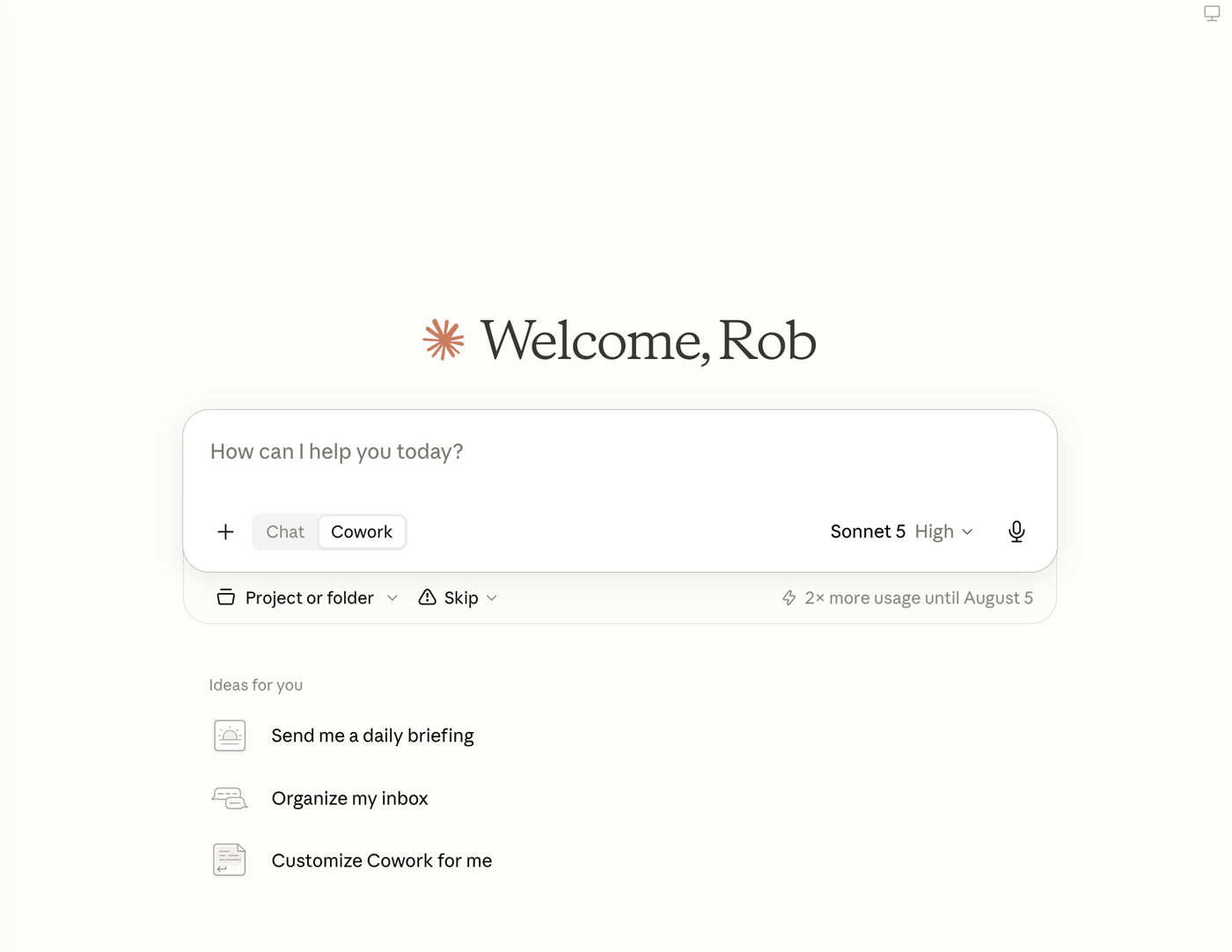
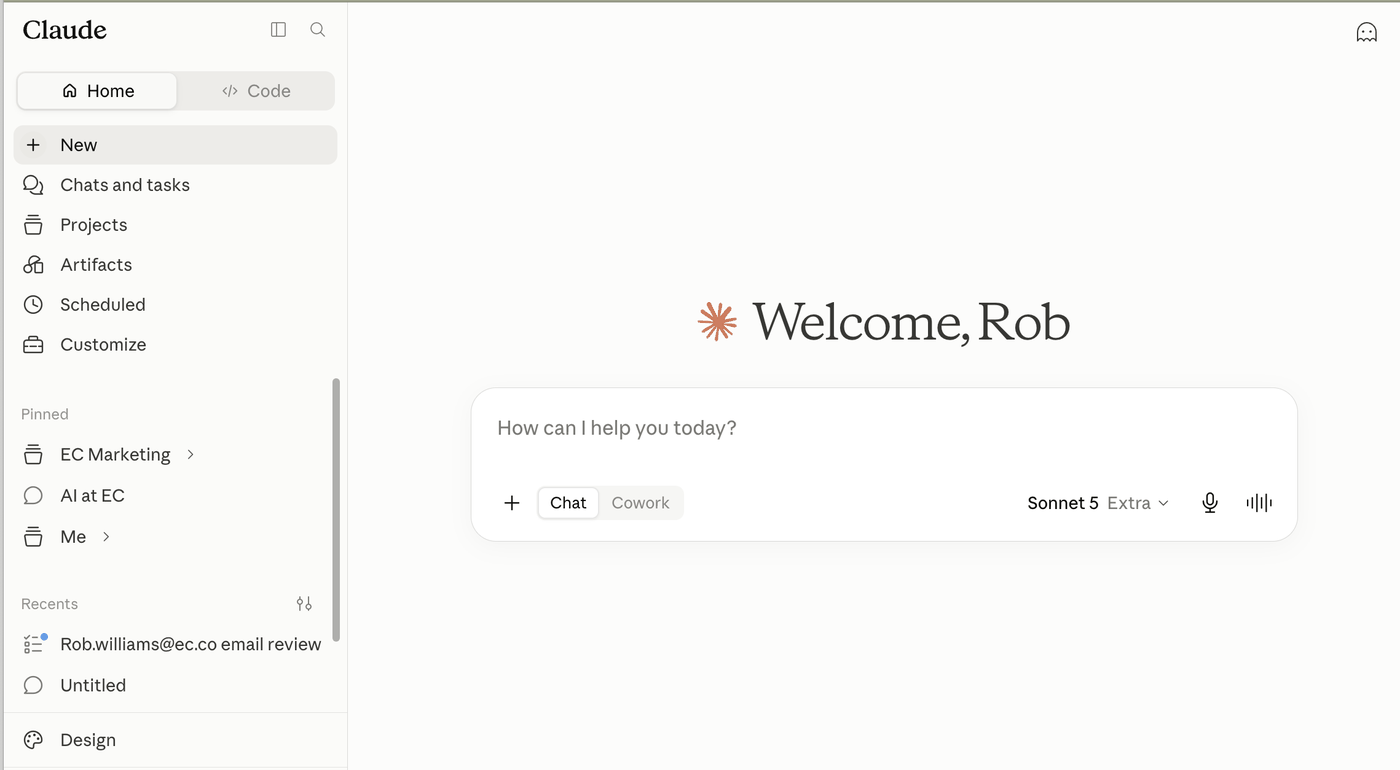
Anthropic — Deploying Claude across your organization →Do the 20-minute setup. Claude without context is a stranger with a keyboard. Claude with context is a colleague. It changes every conversation that follows. Completely new to AI? Your one thing is even smaller: the starter pack.
Three honest ways to travel. Pick the one that's true, not the one that sounds good — you can upgrade any time.
All three are legitimate. The guide is built so you can stop at any level and still be better off than yesterday.
The full AI Use Policy exists, and it's short. These three cover 95% of situations.
Before you paste, ask: would I be comfortable if this left the room? Founder names with their financials, donor data, applicant PII — swap in placeholders.
Every AI output goes through a human before it ships. You are accountable for what you send, post, or publish — whether or not Claude helped write it. AI drafts. You decide.
Before anything AI-made is final: Fact check — did it invent a date or program detail? Tone check — does it sound like the EC or a robot? Security check — did a founder's name or number slip through?
Wharton's Ethan Mollick finds the most advanced AI users are often already inside the organization — using it quietly, saying nothing, because old rules made it feel risky. These rules are permission-first on purpose: they're how we find our hidden experts, not how we police them.
Mollick on hidden adoption →The packing list. Load it once and Claude stops sounding generic and starts sounding like the EC.
Five habits that separate people who get great output from people who get generic output. None require technical skill.
Full sentences, real context, what the thing is for and who will read it. Keywords get you a search result. Background gets you a draft.
Paste an example you're proud of — your best past newsletter, your favorite event copy — and say "like this." One example beats three paragraphs of description.
A table. A checklist. Three options with trade-offs. Two hundred words, not two thousand. If you don't name the shape, you get an essay.
First drafts are a starting bid. Say what's wrong and why, then ask again. Mollick's framing: treat it like a brilliant friend with relevant expertise, not a vending machine. The quality of the output rises with the quality of the argument.
End hard requests with "ask me what you need to know before answering." The questions it asks are often worth more than the first draft — they show you what you forgot to say.
Nobody's graded on speed. This is the route, not a race — check things off as you go. Your checkmarks save in this browser and nobody else sees them.
A good guide doesn't list every restaurant in town. Each department gets one pick — do that first — then the detours worth taking. Fill in the [brackets], keep what works.
Anthropic's cold-start warning: don't hand people a blank page. The teams that get value curate a first task per role — which is exactly what these picks are. Start with yours.
Anthropic — Scaling workflows across your organization →Wharton's Ethan Mollick says every organization needs a "Lab" — one or two people using AI daily — or it never learns what's actually possible. This section is the door.
The Lab isn't a job title and nobody gets assigned to it. It's self-selected: you use Claude daily, you try things that might not work, and you report back — including the failures. Mollick's model has three parts: leadership sets direction, the Lab experiments, and the crowd adopts what the Lab proves. Sam is doing the first part. The show-and-tell is the third. This is the middle.
Mastery has a ladder. Most of the team will live happily on rungs one and two. Lab members climb.
Where everyone starts: a very good colleague with amnesia. Every conversation begins from zero. Useful, and the ceiling is low.
Context loaded once, remembered always. This is the 20-minute setup, and it's where "generic AI" becomes "our AI." Most of the value for most people lives right here.
Teach Claude a repeatable job — a documented workflow it runs the same way every time, triggered by an event or a single command instead of you remembering.
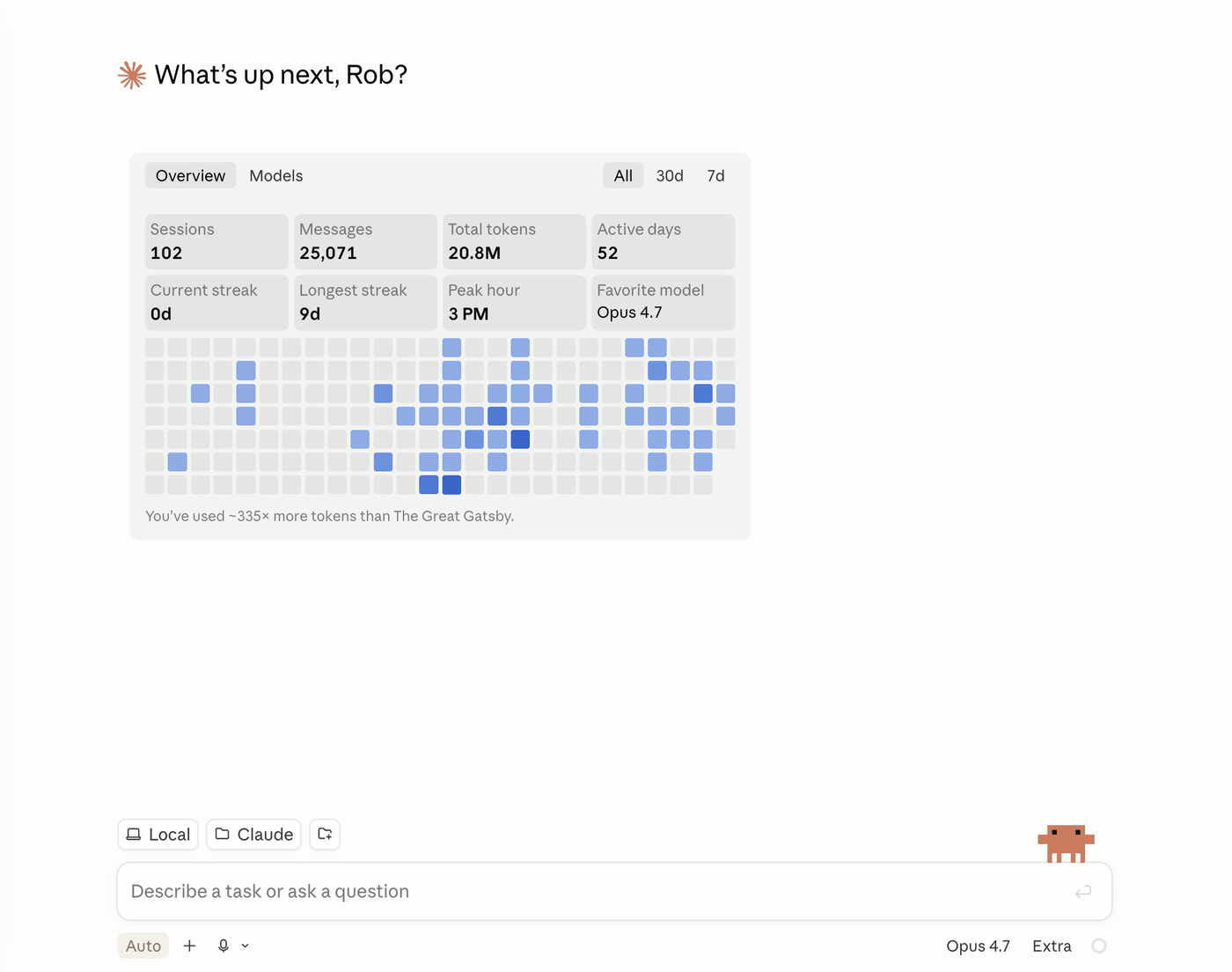
EC example: the 4-1-1 newsletter runs as a skill. One command, send-ready draft, real links.The top rung: Claude that works across files, data, and the web — and builds things. Dashboards, trainers, whole web pages. Power-user territory, and closer than it looks: Anthropic's Thariq Shihipar writes about using it as a general agent for everything, planning in HTML instead of walls of text.
EC examples: this guide, the NEXT Awards committee dashboard, the Find Your Program quiz, and Dakota's PM Trainer were all built here.Lab membership costs one thing: you teach. What you learn goes into the Slack channel, this guide, and a show-and-tell slot. The Lab exists to feed the team — that's the whole model. If that's you, tell Rob. There's a Lab-track itinerary waiting in your first 90 days.
The best use cases aren't the flashy ones — they're the tasks you do so often you stopped noticing them. Tap anything that sounds familiar.
Where new recipes come from: Claire Vo's How I AI is a library of real, specific ways people use AI in their actual work. When the concierge desk runs dry, that's the hunting ground.
How I AI (example episode) →Real work by real teammates — not demos. The reserved lines are waiting for your name.
To get listed: do a thing with Claude, post it in the Slack channel — the prompt, what it made, what it saved — and it goes in the next edition. Honest experiments beat polished case studies. Failures count double; they teach more.
Every trade has its jargon; nobody was born knowing this one. Plain-English translations, no jargon shame. Missing a word? Ask in Slack and it gets added.
"Large language model" — software that read an enormous amount of text and got very good at predicting what comes next. Claude is one. Not magic, not a person: a very well-read collaborator that still needs your judgment.
The AI assistant we use, made by Anthropic. Lives at claude.ai, as a desktop and phone app, and in power tools like Claude Code.
Whatever you type to Claude — a question, an instruction, a pile of messy notes. There is no wrong format and no secret handshake.
One back-and-forth session. Claude remembers everything inside a conversation, and nothing across them — unless you use a Project.
The background you give Claude: who you are, what the work is for, what good looks like. More context, better output. The whole Essentials section is context.
A Claude workspace with memory — your instructions plus files it keeps across every conversation. The amnesia cure from the 20-minute setup.
A plain-text format that uses simple symbols: # for a heading, - for a list, **bold**. AI tools love it because it's just text with structure. If you can read this sentence, you can read markdown. The starter kit downloads as a .md file — open it in any text editor, or paste it straight into Claude.
When AI states something false, confidently. It happens. It's why the fact check exists — and why you're the editor.
How much one conversation can hold before the earliest parts start to fade. Why a very long thread eventually gets forgetful — and why fresh threads per project work better.
A document, web page, or mini-app Claude builds beside the chat, shareable by link. Dakota's PM Trainer is one.
Our standing rule: a person reviews every AI output before it ships. That person is you.
A repeatable job Claude has been taught to run the same way every time — like the 4-1-1 draft. One command instead of re-explaining from scratch.
AI that acts on a trigger — "when this happens, do that" — instead of waiting for you to ask. Rung four of the ladder.
Anthropic's power tool: Claude that works across files, data, and the web — and builds things. This guide came out of it.
The chunks AI actually reads and writes — roughly three-quarters of a word each. Only matters when you hit a usage limit; now you know what the limit is counting.
The plumbing that lets Claude reach other tools — Slack, Drive, calendars — with your permission. It's how agents get hands.
Want the official tour of the screen itself? Anthropic's Get started with Claude is five minutes well spent.
You don't need any of this to start. For the few who finish the guide and want to go to the source.
Anthropic's playbook: champions → pilot → scale. Our rollout matches it — sized down from enterprise to thirteen people.
The "launch ≠ enablement" argument, and why curated first tasks beat blank pages.
Product news and best practices, straight from the source. Where new capabilities show up first.
The book behind our human-in-the-loop rules. Use AI for everything you ethically can; keep human judgment on the output. Rob has a copy you can borrow.
The three-part model our rollout borrows. Leadership sets direction, the Lab experiments, the crowd adopts.
Why your best AI users are already here, quietly — and why permission-first policy surfaces them.
The benchmark behind this guide's numbers: 346 nonprofits on why most stall and what the 7% do differently.
Free policy template and readiness checklist. Our three rules are the cut-down version of this thinking.
The sector case, plus NTEN's Amy Sample Ward as the honest counterweight to the hype.
Real, specific workflows from real practitioners. The hunting ground for our next recipe.
Claude Code as a general agent; planning in HTML instead of text walls. Rung-four territory.
Product and AI tactics. Pull when curious — idea source, not required reading.